
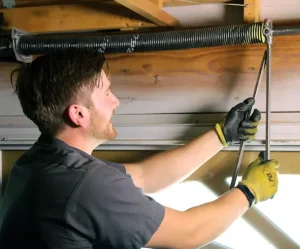
Spring type, spring size, door weight, cycle rating, and service timing all affect the final price of a garage door spring replacement. The number of springs on the door also changes the quote, along with the grade and quality of the replacement springs a company chooses to install.
Two quotes for the same door can differ widely when companies weigh these factors differently or leave key details out of the written estimate. This guide walks through each cost factor in detail, along with practical ways to keep spring repair costs fair and predictable from the very first call.
Key Takeaways
- Torsion and extension springs require different parts and labor.
- Larger springs with thicker wire cost more to replace.
- Heavier doors need stronger springs sized to their exact weight.
- High cycle springs cost more upfront but last through more use.
- After-hours emergency service can raise the final quote.
Main Cost Factors in a Garage Door Spring Replacement
No two garage doors carry identical spring needs, so the price for new springs can vary widely even between houses on the same street.
| Cost Factor | Why It Raises or Lowers the Price | Question to Ask the Technician |
| Spring type | Torsion and extension setups use different parts and steps | Which spring type is on this door? |
| Spring size and wire gauge | Thicker, longer springs cost more to make | What wire gauge does the door need? |
| Weight and size of the door | Heavier doors need stronger springs | How much does this door weigh? |
| Single or double setup | Two springs mean more parts and labor | Should both springs be replaced now? |
| Cycle rating and quality | High cycle and coated springs last longer | What cycle rating does the quote include? |
| Labor and service timing | After-hours calls and local rates add cost | Does the price change outside business hours? |
Choosing the lowest price over the right spring for the door often shortens spring life and leads to a second service call far sooner than expected.
Spring Type
The spring type sets the baseline for pricing, since torsion systems above the door and extension setups along the tracks use different parts and steps.
Price differences between spring types usually come from these details:
- Torsion spring hardware, including cones, shafts, and bearings.
- Extension spring pulleys and safety cables that need checking.
- Winding work that takes more time on torsion setups.
- Conversion costs when an older door moves to torsion.
- Modern garage doors that use torsion springs as standard.
Pricing a garage door torsion spring repair correctly starts with confirming the setup, since torsion work involves more hardware than an extension job.
Spring Size and Wire Gauge
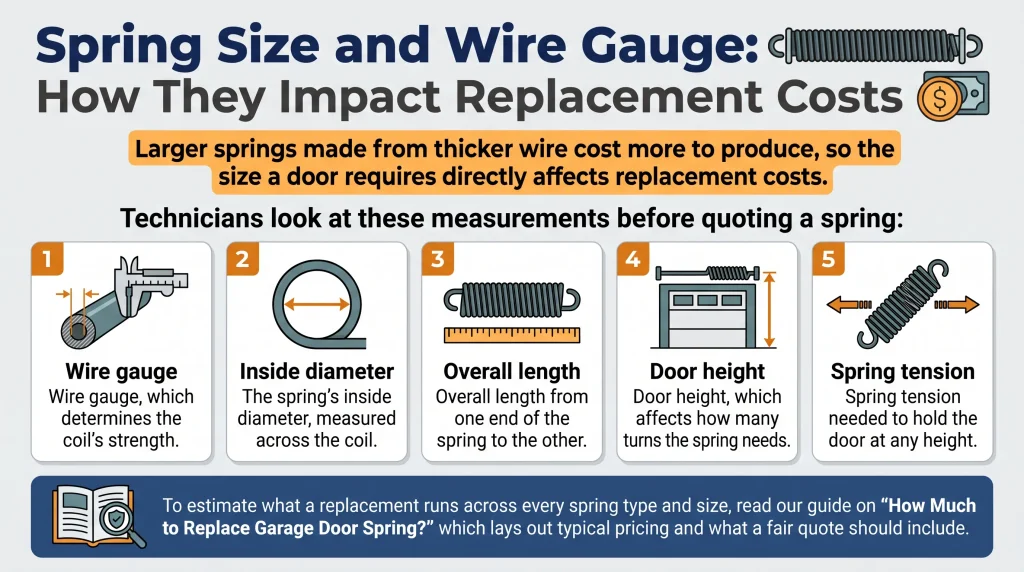
Larger springs made from thicker wire cost more to produce, so the size a door requires directly affects replacement costs.
Technicians look at these measurements before quoting a spring:
- Wire gauge, which determines the coil’s strength.
- The spring’s inside diameter, measured across the coil.
- Overall length from one end of the spring to the other.
- Door height, which affects how many turns the spring needs.
- Spring tension needed to hold the door at any height.
To estimate what a replacement runs across every spring type and size, read our guide on How Much to Replace Garage Door Spring?, which lays out typical pricing and what a fair quote should include.
Weight and Size of the Door
Heavier and wider doors need stronger springs to lift them safely, which raises the price compared with a lighter single bay door.
Look for these door details that add weight to the job:
- Steel door construction with added insulation layers.
- Solid wood panels that weigh far more than steel.
- Windows and decorative hardware attached to the panels.
- Double door widths that need larger springs.
- Door size changes after a full door replacement.
Knowing the door’s approximate weight before calling helps a technician bring properly sized springs and avoid a return trip for the right parts.
Single vs. Double Spring Setups
Replacing both springs on a two-spring door runs $450 to $600 depending on spring size, since the job doubles the parts and adds winding time.
Setup choices like these shape the cost of a two-spring job:
- Replacing the second spring at the same time as the broken spring.
- Leaving the remaining spring in place and having it wear out soon after.
- Extra strain on an older spring once its partner fails.
- Return visit fees when the older spring breaks next.
- Balanced lift across the whole spring system after a paired swap.
To compare the long-term value of replacing one spring against replacing both, read our guide on Is Double Garage Door Spring Replacement Worth It?, which weighs the upfront price against the future savings of a paired job.
Cycle Rating and Spring Quality
Cycle rating measures how many open-and-close trips a spring can handle, and higher ratings cost more upfront.
Quality differences that change the spring price include these:
- Standard springs rated for fewer cycles.
- High-cycle springs built for heavy daily use.
- Powder-coated finishes that resist rust and moisture.
- American-made steel with consistent coil quality.
- Warranty length tied to spring quality.
Duramaster powder-coated garage door springs, installed by our team with a five-year warranty, deliver better durability than bare standard steel over years of daily trips.
Labor and Service Call Timing
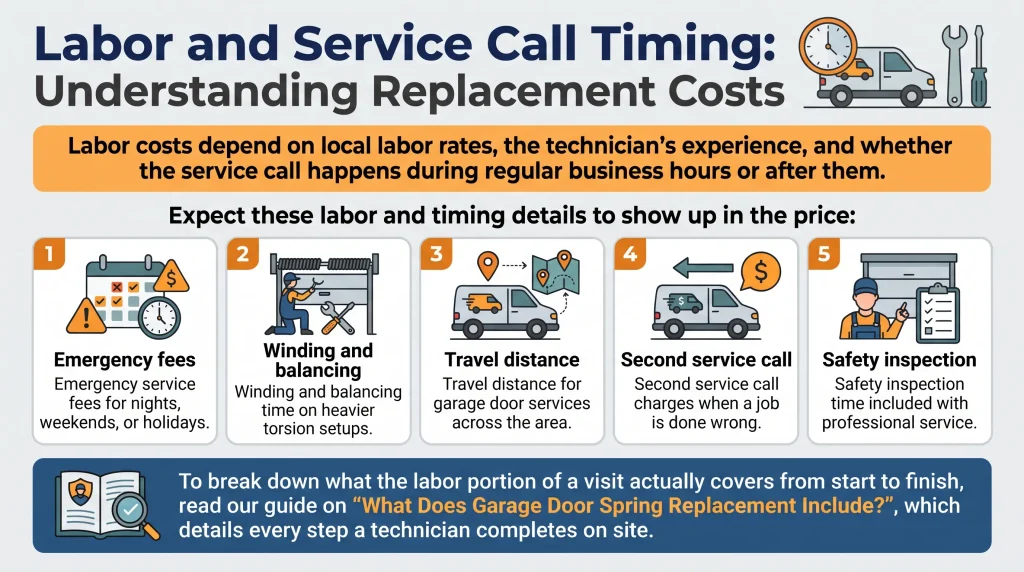
Labor costs depend on local labor rates, the technician’s experience, and whether the service call happens during regular business hours or after them.
Expect these labor and timing details to show up in the price:
- Emergency service fees for nights, weekends, or holidays.
- Winding and balancing time on heavier torsion setups.
- Travel distance for garage door services across the area.
- Second service call charges when a job is done wrong.
- Safety inspection time included with professional service.
To break down what the labor portion of a visit actually covers from start to finish, read our guide on What Does Garage Door Spring Replacement Include?, which details every step a technician completes on site.
Ways to Keep Spring Replacement Costs Fair
Smart planning before the job and regular maintenance after it keep spring replacement affordable without sacrificing safety, part quality, or professional installation.
Try these practical steps to hold costs steady:
- Book the visit during regular business hours when possible.
- Replace both springs at the same time to prevent premature failure.
- Ask for the full price, parts, and warranty in writing.
- Compare quotes from licensed garage door companies.
- Keep the door properly balanced by testing it every month.
Scheduling yearly garage door maintenance lets a technician tighten loose hardware and check door balance before small issues raise the next repair bill.
The Door and Its Spring Setup Decide the Final Price
Spring replacement pricing depends on the spring type, the size and weight it supports, the part’s quality, and when the work gets booked on the calendar. Understanding how those pieces fit together makes a fair quote easy to identify and an inflated one far harder to accept at face value from any local company.
Bradbury Garage Doors gives every customer across San Diego, CA, an upfront price that accounts for spring type, door weight, and warranty coverage before any work begins. Contact us or give us a call today to learn exactly what a spring replacement will cost for your door and setup.
Frequently Asked Questions
Are high cycle springs worth the added price?
High-cycle springs cost more upfront but handle far more trips, making them a strong value for heavily used doors. Busy households tend to get the most value, since the added cycles extend the life of your garage door and its spring setup.
Can an unbalanced door raise the cost of a spring replacement?
An unbalanced door often wears springs, cables, and rollers unevenly, which can add garage door parts to the final bill. Our technicians check cables and rollers on every visit, so they explain any additional garage door repair before work begins.
What warning signs mean a spring replacement will cost more?
Warning signs like a straining garage door opener or a door that slams shut suggest other parts may be damaged too. Calling for service as soon as a spring breaks limits the damage and keeps garage door repair costs closer to the basic spring price.
How do local labor rates affect the final quote?
Labor makes up a large share of the price, and rates vary between areas the same way they do for garage door installation. Experienced garage door companies often work faster, which keeps labor time predictable on the final invoice.
Does a powder-coated finish add to the spring price?
A powder-coated finish adds a small amount to the part cost, and it pays for itself through rust resistance. Our Duramaster springs come powder-coated as standard with a five-year warranty, so the finish is included in every professional spring replacement quote.
Why do two quotes for the same door look so different?
Differences usually trace back to spring grade, warranty length, and whether the price includes the safety check and balance test. Comparing every line item side by side, along with customer satisfaction reviews, shows which company offers real value for the money.
Is wire gauge something to ask about before booking?
Asking about wire gauge confirms that a professional garage door spring repair uses springs sized to the door and not a generic part. Wrong sizing puts the garage door system out of balance and can shorten spring life well before the rated cycles.
Can extension springs cost less to replace than torsion springs?
Extension springs often cost less in parts, although the safety cables and pulleys usually need replacing at the same visit. Converting to a torsion setup costs more upfront, but it keeps the spring's significant tension contained on a single shaft.
At what point does a spring repair call for new hardware too?
Worn cables, cracked drums, or bent brackets found during professional repair mean the job needs more than new springs. Replacing damaged hardware alongside the springs helps protect against serious injury if a part fails under load during the next door opening.