
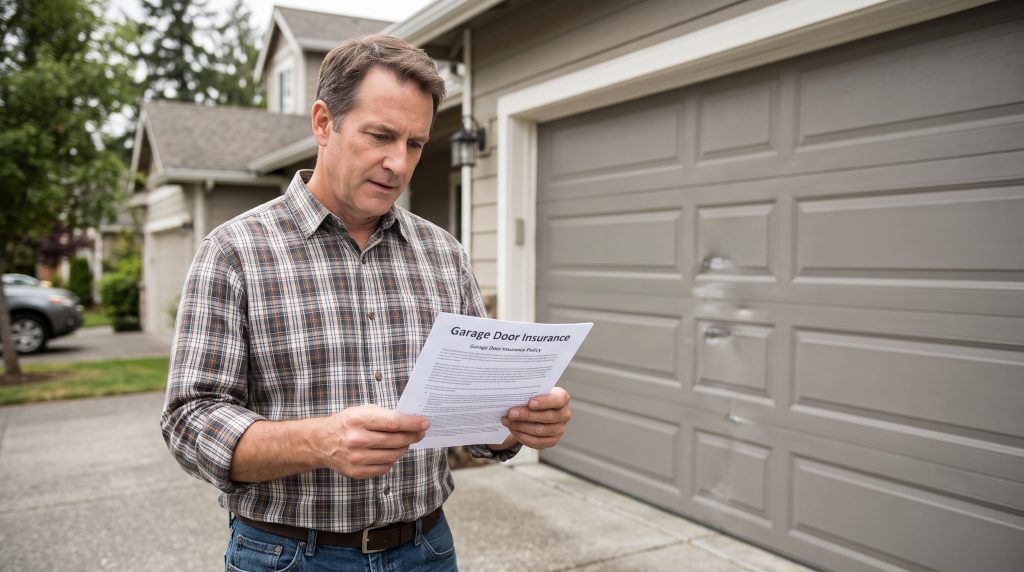
Homeowners insurance typically covers garage door damage from sudden events like storms, falling trees, or vandalism, while wear and tear from daily use stays with the owner. Insurers judge each garage door repair claim by its cause, so the reason the door failed matters as much as the damage itself.
Deductibles, policy limits, and exclusions also decide how much of the total cost an insurer will actually pay once a claim gets approved. This guide sorts common garage door damage into covered and uncovered cases, along with the steps for filing a claim that holds up with an insurer.
Key Takeaways
- Storm, tree, and vandalism damage usually falls under a homeowners policy.
- Wear and tear, like aging springs, stays an out of pocket expense.
- Damage from a resident vehicle may fall under auto coverage instead.
- Photos and a written estimate strengthen any garage door claim.
- Deductibles can make small claims less worthwhile than paying directly.
What Does Homeowners Insurance Usually Cover for Garage Doors?
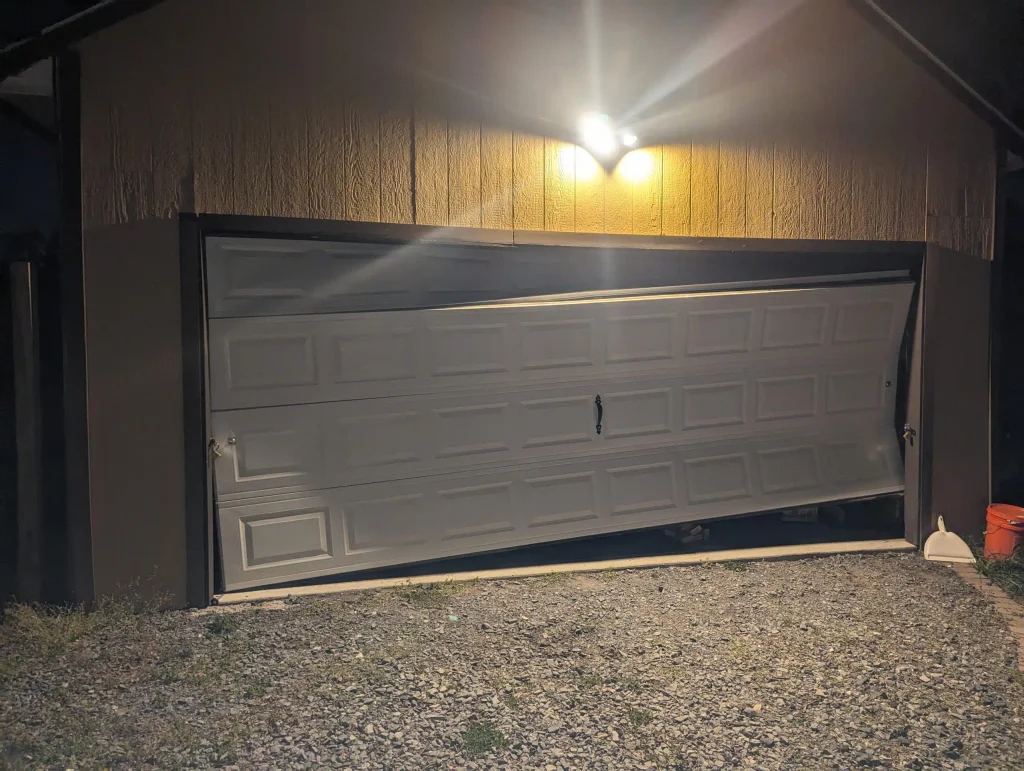
Policy wording varies between insurers, yet most standard homeowners policies treat garage doors as part of the property and cover them against the same perils.
| Situation | Typically Covered? | Policy Detail to Check |
| Storm and wind damage | Usually covered | Wind or hail deductible amount |
| Falling trees and debris | Usually covered | Limits on tree removal costs |
| Vehicle impact | Depends on the driver | Whether auto coverage applies first |
| Vandalism and forced entry | Usually covered | Police report requirements |
| Wear and tear | Not covered | Maintenance and aging exclusions |
| Neglect and DIY damage | Not covered | Upkeep and improper repair clauses |
Reviewing the declarations page and exclusions list before any damage happens makes a future claim faster and far less stressful to manage.
Storm and Wind Damage
High winds and flying debris can dent panels or push a door off its tracks, and storm damage like this typically falls under typical coverage.
Storm claims tend to involve damage like the following:
- Small dents from hail or blowing debris.
- Panel damage from wind pressure on a closed door.
- Bent tracks after a gust forces the door inward.
- Broken windows set into decorative door panels.
- Garage door parts loosened by repeated wind strain.
To sort out whether storm damage calls for a same-day visit or a scheduled one, read our guide on When Is Emergency Garage Door Repair Worth It in San Diego?, which weighs the risks of waiting against the price of fast service.
Falling Trees and Debris
Trees and large branches that fall onto a garage door usually count as a covered event, and many policies also help pay for removing the debris.
Tree strikes often leave damage like this behind:
- Structural damage to the frame around the door opening.
- Crushed sections of an insulated panel or steel door.
- Wood panels split by the weight of a heavy branch.
- Twisted tracks that stop the door from moving.
- Cracked window inserts or trim along the panels.
A garage door panel replacement for the sections that took the hit is often all an approved tree claim covers, leaving the rest of the door in place.
Vehicle Impact
Vehicle damage to a garage door may fall under homeowners coverage or an auto policy, depending on who was driving and how the insurer splits responsibility.
Claims of this kind usually hinge on details such as these:
- Guest or delivery drivers whose auto insurance may respond first.
- Resident drivers whose own collision coverage may apply.
- Extent of damage across panels, tracks, and the opener.
- Police or incident reports that document the strike.
- Repair estimates showing the full scope of the work.
Straightening bent rails through a garage door track repair restores safe travel after a bumper strike, and an approved claim usually covers that work.
Vandalism and Forced Entry
Vandalism and forced entry generally fall under standard coverage, and a police report gives the insurer clear proof of what happened to the door.
Forced entry attempts commonly damage areas like these:
- Pried bottom panels near the weather seal.
- Broken locks or tampered emergency release hardware.
- Damaged safety features like sensors or wiring.
- Spray paint or scratches across the door face.
- Garage door opener units pulled loose from the ceiling mount.
Filing the police report first and sharing its number with the insurer keeps the claim moving and limits back-and-forth with the adjuster.
Wear and Tear
Aging parts that fail from daily use fall outside most policies, so a broken spring or worn rollers usually stay a direct expense for the owner.
Repairs that insurers typically treat as normal wear include:
- Torsion springs that snap after years of cycles.
- Extension springs stretched past their working life.
- Rollers worn flat from thousands of trips along the track.
- Frayed cables needing a garage door cable repair.
- Openers slowing down as the motor ages.
To price out the repairs insurance leaves to the homeowner, read our guide on How Much Does Garage Door Repair Cost in San Diego, CA?, which lists current prices for springs, cables, rollers, panels, and new openers in one place.
Neglect and DIY Damage
Insurers can deny claims tied to missed maintenance or improper repairs, since damage from neglect does not count as a sudden covered event.
Adjusters often look for signs of neglect like these:
- Rust and corrosion that built up over several years.
- Loose hardware left untightened across many months of use.
- Springs or cables adjusted without proper tools.
- Parts from home improvement stores fitted incorrectly.
- Signs of wear ignored until the door stopped working.
To add up the full cost of a DIY attempt that insurance refuses to cover, read our guide on Why Does DIY Garage Door Repair Cost More in San Diego?, which details the parts, labor, and second visits that usually follow a failed fix.
How to File a Garage Door Insurance Claim
Getting homeowners insurance to cover garage door repair starts with clear photos and a written estimate gathered before permanent repairs.
Follow these steps to give the claim its best chance:
- Photograph the damage from several angles right away.
- Call the insurer to open the claim and confirm coverage.
- Get a written estimate from a licensed repair company.
- Compare the deductible against the expected repair costs.
- Keep receipts for service call fees and temporary fixes.
Claims for a door damaged beyond repair can fund a full garage door replacement, with the deductible taken out of the approved amount.
Insurance Covers Sudden Damage, Not Everyday Wear
Storms, falling trees, vehicle strikes, and vandalism usually qualify for coverage, while aging springs, worn rollers, and neglect stay the responsibility of the owner. Reading the policy before anything breaks and documenting damage the moment it happens gives any claim a strong start and brings peace of mind.
Bradbury Garage Doors delivers free repair estimates that homeowners across San Diego, CA, can share with an insurer, along with licensed, insured technicians to complete the approved work. Contact us or give us a call today for an estimate that documents the damage clearly before the claim goes in.
Frequently Asked Questions
Will insurance pay when a homeowner backs into the garage door?
Damage caused by a resident driver may fall under collision coverage on the auto policy or under the homeowners policy, depending on the insurer. Calling both insurers before booking the repair helps confirm which policy pays and which deductible applies to the final cost.
Is paying the deductible worth it for a small repair?
Minor repairs to a single garage door often cost less than the deductible itself, so paying directly can make more sense than filing. Small claims can also raise future premiums, which adds up over the long run for a repair that cost little to begin with.
Can a denied garage door claim be appealed?
Insurers generally allow an appeal, and adding photos, repair estimates, or a technician report can support a second review of the decision. Asking the adjuster for the exact reason behind the denial makes it easier to supply the right proof the next time around.
What proof does an insurer need for a garage door claim?
Clear photos, the date of the event, and a written estimate listing garage door parts and labor costs usually form the core of a claim. Police reports for vandalism and weather records for storm damage add weight, especially on larger claims involving panel work or structural repairs.
Does renters insurance cover garage door damage?
Renters insurance covers personal belongings, so damage to the garage door itself usually falls on the landlord and their property policy. Tenants should report the damage to the landlord quickly, since the owner arranges and pays for the garage door repair service.
Are garage door openers covered after a power surge?
Surge damage from a lightning strike is often covered, while an opener failing from age falls under normal wear and tear. Replacing a damaged unit with a new garage door opener may also involve electrical work, which a covered claim can include.
How long does a garage door insurance claim usually take?
Simple claims can wrap up within a couple of weeks, while storm events that affect many homes often take longer to process. A door left stuck open creates safety risks, so temporary repairs that secure the garage are usually worth booking through emergency services right away.
Should the repair company speak with the insurance adjuster?
Sharing the written estimate with the adjuster helps both sides agree on the scope of work, the parts needed, and the labor charges involved. Homeowners stay in control of the claim, yet a detailed estimate from a company with skilled labor and clear pricing keeps the review simple.
Can missed maintenance lead to a denied claim?
Yes, adjusters can deny a claim when rust, loose parts, or worn springs show the damage built up over time instead of happening suddenly. Regular tune ups keep older doors in good condition and leave a service record that supports any future claim.