
Your garage door is the largest moving part in your home, and when it is working properly, it is easy to take for granted. But a door without the right safety features in place is a serious risk, not just to your property but to the people inside your home. Whether your door is brand new or has been running for years, understanding what safety features it should have and how to check if they are working is something every homeowner should know.
In San Diego, where homes are frequently listed, sold, and inspected, a garage door that fails a safety check can slow down a transaction or raise red flags for buyers. Staying on top of these features is not just about day-to-day safety. It is also about protecting the value of your home. Catching issues early through a professional garage door repair or safety inspection can make all the difference before a small problem turns into a costly one.
The Auto-Reverse Sensor Is Your First Line of Defense
The auto-reverse feature is one of the most important safety mechanisms on any modern garage door. When the door detects an object, a person, or a pet in its path during closing, it stops immediately and reverses direction. This feature became federally required for all new garage door openers sold in the United States after 1993, but many older doors still in use today either lack it entirely or have sensors that are no longer functioning correctly.
How to Check If Yours Is Working
- Place a flat object like a piece of wood on the ground in the door’s path and try to close it
- The door should reverse immediately upon contact
- If it does not reverse or hesitates before reversing, the system needs professional attention
- Test this at least every few months to make sure it is responding correctly
If your door is showing signs that it may be past the point of repair, read When to Replace a Garage Door Instead of Repairing It to help you make the right call.
Photo-Eye Sensors Keep the Path Clear
Photo-eye sensors are the small devices mounted near the bottom of your garage door tracks on each side. They send an invisible beam across the opening, and if anything breaks that beam while the door is closing, the door stops and reverses. These sensors work alongside the auto-reverse feature to give your door a second layer of protection.
Over time, photo-eye sensors can fall out of alignment, get covered in dust or dirt, or simply stop working. In San Diego’s climate, where dust and debris can build up quickly, checking and cleaning these sensors regularly is a simple step that makes a real difference.
Signs Your Photo-Eye Sensors Need Attention
- The door reverses immediately after you try to close it even when nothing is in the way
- The sensor lights are blinking, or one light is off entirely
- The sensors are visibly dirty, misaligned, or physically damaged
- The door closes fine manually, but not with the opener
For a full routine on keeping your door in good working condition year-round, read How to Maintain Your Garage Door and Extend Its Life.
Rolling Code Technology Protects Against Unauthorized Entry
Older garage door openers used a fixed code transmitted every time you pressed the remote. The problem with fixed codes is that anyone with a scanner can capture that code and use it to open your door. Rolling code technology generates a new code every single time the remote is used, meaning even if someone captures the signal, it is already expired by the time they try to use it.
According to DASMA safety tips, upgrading to a modern opener with rolling code technology is one of the most effective steps homeowners can take to improve garage security. If your opener is more than 15 years old, there is a good chance it is still running on a fixed code system.
What to Check on Your Current Opener
- Look up your opener model and confirm whether it uses rolling code or fixed code technology
- If the opener predates 1996, it is very likely using an outdated fixed code system
- Replacing the opener is the most reliable way to upgrade this feature
- Some newer systems also include smartphone alerts when the door is opened or left open
Manual Release and Emergency Disconnect
Every garage door opener is required to have a manual release, which is typically a red cord hanging from the opener rail. This allows you to disconnect the door from the automatic system and operate it by hand in the event of a power outage or mechanical failure. Many homeowners have never tested it and do not know how it works until they actually need it in an emergency.
The emergency disconnect also has a security consideration. Some older systems have releases that can be triggered from outside the garage using a simple wire hook through the top of the door frame. Modern openers are designed to prevent this kind of forced entry, but older systems may still be vulnerable.
How to Make Sure Yours Works Properly
- Pull the red cord to confirm that the door disengages and can be moved manually
- Make sure the door stays in place when disengaged and does not drop suddenly
- Check that the door can be re-engaged with the automatic system after being released
- If the manual release feels stiff, stuck, or broken, have a technician inspect it
If you are considering upgrading your door entirely, our guide on Types of Garage Doors: What’s Best for Your Home walks through the best options available for San Diego homeowners.
Garage Door Opener Force Settings
The force setting on your opener controls how much pressure the motor applies when opening or closing the door. If the force is set too high, the door will push through resistance rather than stopping, which defeats the purpose of the auto-reverse feature. If it is set too low, the door may not close all the way or may reverse without reason.
According to automatic garage door safety standards, opener force settings are a critical part of overall door safety and should be calibrated to work correctly with the auto-reverse system. Most homeowners never adjust these settings, but they can shift over time as the door hardware wears.
Signs the Force Setting May Be Off
- The door stops or reverses before fully closing, even when the path is clear
- The door pushes through objects instead of reversing on contact
- The opener motor strains or sounds louder than usual during operation
- The door opens or closes faster or slower than it used to
Torsion Spring Safety Containment
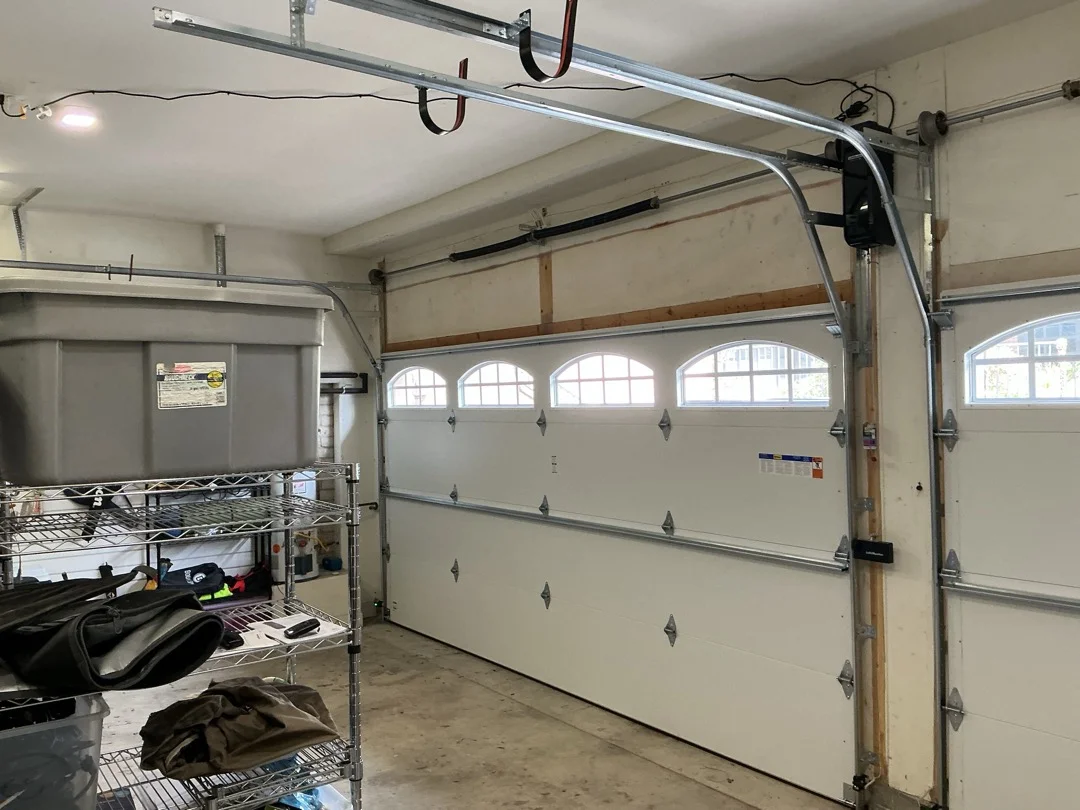
Torsion springs are under extreme tension and store a significant amount of mechanical energy. When a spring breaks, it releases that energy instantly. On older doors, a broken spring can fly off the shaft and cause serious damage or injury. Modern torsion spring systems are designed with a containment rod running through the center of the spring so that if it breaks, it stays on the shaft rather than becoming a projectile.
If your garage door has older extension springs running along the sides of the door rather than a torsion spring mounted above, make sure those springs have safety cables running through them. These cables serve the same containment purpose and are a straightforward preventive measure.
What to Inspect on Your Spring System
- Check that torsion springs have a rod running through the center coil
- Confirm that extension springs on the sides of the door have safety cables installed
- Look for visible signs of wear, such as gaps in the coils, rust, or stretched sections
- Never attempt to adjust or replace garage door springs yourself, as they require specialized tools and training
Secure Locks and Entry Points
The garage is one of the most common entry points for break-ins, particularly in homes where the door between the garage and the living space is not secured. A garage door with a working auto-lock feature, or one that uses a deadbolt-style locking mechanism, is significantly more resistant to forced entry than one that relies only on the opener.
If your door has a manual lock, make sure it is being used when the door is not in use for extended periods. Traveling homeowners in San Diego often forget that an unlocked garage door creates a vulnerable entry point even when the opener remote is safely stored inside.
Entry Security Checks to Do Now
- Confirm the door between your garage and home has a solid core and a deadbolt lock
- Check that the exterior garage door has a working manual lock or auto-lock feature
- Make sure the emergency release cannot be triggered from outside through the door frame
- Consider a smart opener that sends alerts when the door is opened or left open too long
Keeping Children Safe Around Garage Doors
Garage doors are one of the leading causes of preventable injury for young children at home. The weight of the door, the spring tension, and the moving parts all create risks that children do not fully understand. Teaching children not to play near the door or touch the controls is a starting point, but it is not enough on its own.
Wall-mounted control buttons should be placed high enough that young children cannot reach them. Regular safety checks and knowing that your auto-reverse and photo-eye sensors are working correctly give you an added layer of protection when children are around the garage. Making garage door maintenance a priority is one of the simplest ways to make sure your door never becomes a hazard for the people you care about most.
Practical Safety Steps for Families
- Mount wall control buttons at least five feet from the ground
- Make sure children understand the garage door is not a toy or a game
- Test auto-reverse and photo-eye sensors regularly, especially if you have young children
- Never allow children to stand under a moving door or operate the controls unsupervised
Safety Is Not a One-Time Check
Garage door safety is not something you set up once and forget. Springs wear down, sensors shift, and technology becomes outdated. Building a simple routine of annual or twice-yearly checks keeps your door performing the way it should and catches small issues before they turn into bigger problems.
Bradbury Garage Doors has been helping San Diego homeowners keep their garage doors safe and running properly. Our team checks everything from sensor alignment to spring condition, so you know exactly where your door stands. Contact us today, or give us a call to schedule your safety inspection today.
Frequently Asked Questions
How do I know if my garage door opener uses rolling code technolog?
Check the model number on your opener and look it up online, or check the owner's manual. Most openers manufactured after 1996 use rolling code. If yours predates that, it is likely using a fixed code system.
How often should I test my photo-eye sensors?
Testing them once a month is a good habit. Simply wave an object through the beam while the door is closing to confirm it stops and reverses. Clean the sensor lenses with a soft cloth if you notice any response issues.
Can I install safety features on an older garage door myself?
Some upgrades, like cleaning sensors or adjusting alignment, are manageable for most homeowners. However, anything involving springs, opener replacement, or wiring should be handled by a professional technician.
What should I do if my garage door does not reverse on contact?
Stop using the door immediately. A door that does not reverse is a safety hazard. Call a professional to inspect and recalibrate or replace the auto-reverse system before resuming use.
Is it safe to manually release my garage door during a power outage?
Yes, that is exactly what the manual release is designed for. Pull the red cord to disengage the opener and operate the door by hand. Make sure the door is fully closed before pulling the cord to avoid it falling unexpectedly.
What are extension spring safety cables and do I need them?
Safety cables run through the center of extension springs along the sides of the door. They contain the spring if it breaks under tension. If your door has extension springs without these cables, have them installed as soon as possible.
How high should wall-mounted garage door controls be placed?
At least five feet from the floor to keep them out of reach of young children. This is a simple but effective way to prevent accidental or unsupervised operation.
Can someone break into my garage by triggering the manual release from outside?
On some older doors, yes. A wire or thin tool inserted through the top of the door frame can sometimes hook the release cord. Modern openers are designed to prevent this. If your door is older, ask a technician about adding a manual release shield.
How do I know if my opener's force setting is correct?
Place a two-by-four flat on the ground in the door's path and close the door. It should reverse when it hits the wood. If it pushes through, the force setting is too high and needs to be adjusted by a professional.