
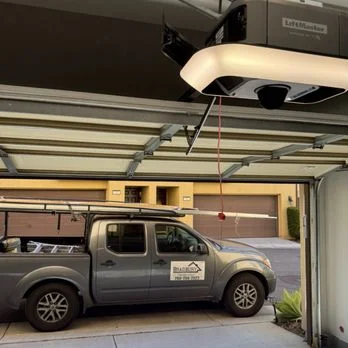
You pressed the button. Nothing happened. Or maybe it made a strange noise, moved halfway, and stopped. Whatever is going on with your LiftMaster garage door opener, one thing is clear: something is not right, and you want to know why.
The good news is that most opener problems come from a short list of common causes. Understanding what is behind the issue helps you describe it clearly when you call a technician and avoid making the problem worse while you wait.
This guide walks you through the most frequent reasons a LiftMaster garage door opener starts acting up, what each problem looks and sounds like, and what a trained professional should handle for you. If you are a homeowner in San Diego, CA, this is a good starting point before you make that call.
The Power Source Is Interrupted
Before assuming the worst, the issue could be as simple as a loss of power to the unit. This is one of the most overlooked causes of an unresponsive opener.
What to look for:
- The opener light does not turn on when you press the wall button.
- No sound at all when you attempt to operate the door.
- Other devices on the same wall outlet or circuit have also stopped working.
What you can check:
- Confirm the opener is plugged in securely to its outlet.
- Check your home’s circuit breaker panel for any tripped breakers.
- Test the outlet with another small device to confirm it has power.
If the outlet and breaker are fine but the opener still does not respond, the problem is likely internal and will require garage door repair. A technician can determine whether the motor, capacitor, or logic board has failed and needs to be replaced.
If you are unsure whether this warrants a professional visit, read through When to Call a Technician for Your LiftMaster Garage Door Opener for a clear breakdown of when it is time to make that call.
The Safety Sensors Are Blocked or Misaligned
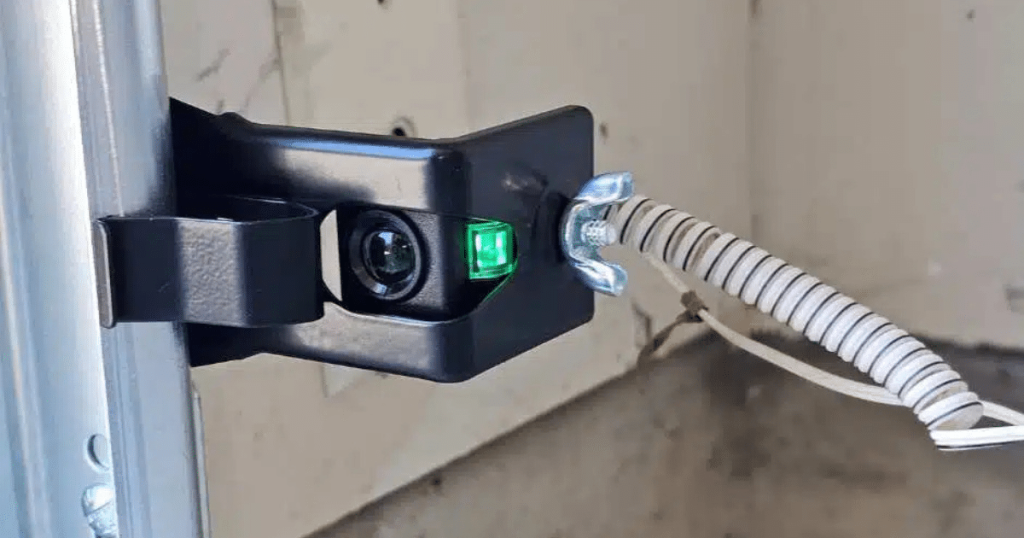
LiftMaster garage door openers are built with photo-eye sensors near the bottom of the door on both sides. These sensors send an invisible beam across the opening. If anything interrupts that beam, the door will not close.
Signs your sensors are the problem:
- The door opens fine, but refuses to close all the way.
- The opener light blinks several times when you try to close the door.
- One of the sensor lights is blinking or not lit at all.
What you can check:
- Look for any object sitting in the path of the sensors, including a broom, a box, or even a buildup of dirt on the lens.
- Wipe both sensor lenses gently with a dry cloth.
- Check that both sensors are aimed directly at each other. The indicator lights should both be solid.
If realigning the sensors does not stop the blinking, the sensors may be damaged, or the wiring may have been nicked or pulled loose. That requires a technician to inspect and repair properly.
Sensor issues become even more critical during summer when kids are constantly moving through the garage, and our guide on Is Your LiftMaster Garage Door Opener Safe This Summer? covers exactly what San Diego families need to watch for this season.
The Springs Are Worn Out or Broken
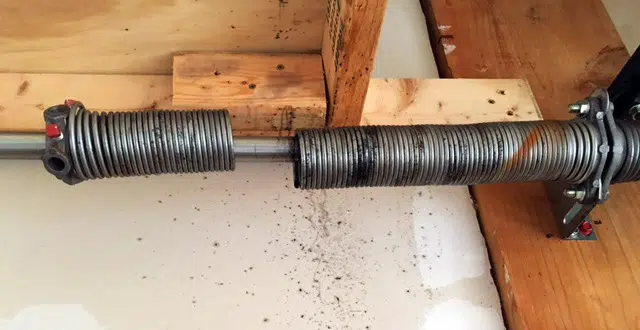
The springs on your garage door do the heavy lifting, literally. They counterbalance the weight of the door so the opener motor does not have to strain to move it. When a spring wears out or breaks, the opener simply cannot do its job.
How to recognize a spring problem:
- The opener runs but the door barely moves or does not lift at all.
- You hear a loud bang from the garage, often described as a firecracker going off.
- The door looks crooked or sits lower on one side than the other.
What you should and should not do:
- Do not attempt to operate a door with a broken spring. The door could fall suddenly and cause serious injury.
- Do not try to remove or adjust the springs yourself. They are under extreme tension and require specialized tools.
- Call a certified technician as soon as possible to handle the spring replacement safely.
The Trolley or Drive System Has Failed
The trolley is the part that physically moves the door along the track. It connects to the opener through a drive system, which on LiftMaster models can be a chain, belt, or screw drive. When any part of this system fails, the motor may run but the door will not move.
Signs of a trolley or drive failure:
- You hear the motor running but the door stays completely still.
- The chain or belt appears visibly slack, broken, or hanging loose.
- The trolley carriage is stuck or has separated from the drive mechanism.
What you can check:
- Look up at the rail running along the ceiling of your garage. If the chain or belt looks limp or is clearly broken, that confirms the issue.
- Check if the emergency disconnect cord was accidentally pulled, which would put the door into manual mode.
- If it is just the disconnect, you can re-engage it by pulling the cord back toward the motor unit.
Anything beyond reconnecting the emergency release needs a technician. Drive components on LiftMaster openers are specific to the model and require the right parts and proper installation to work correctly.
The Remote or Keypad Has Lost Its Programming
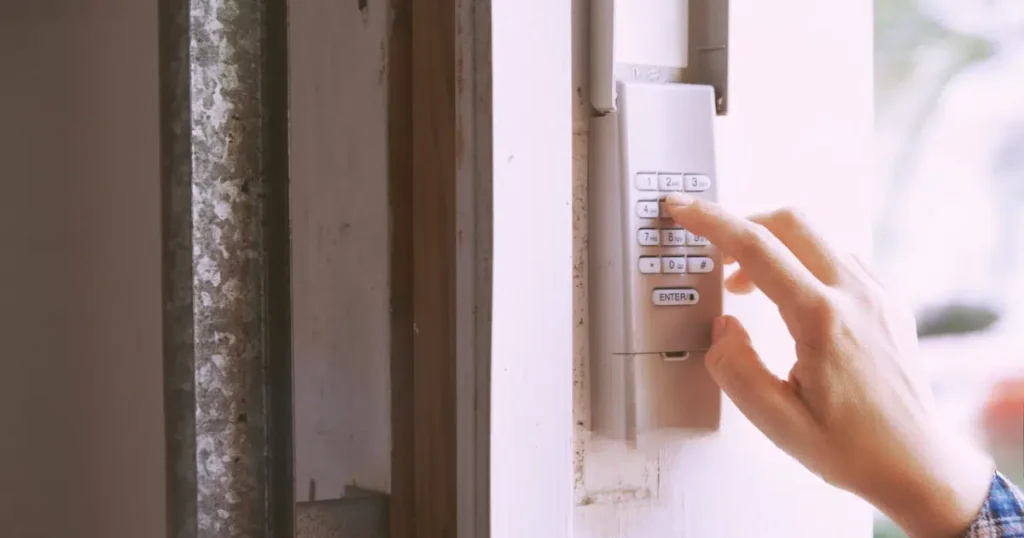
Sometimes the opener itself is perfectly fine. The problem is that the remote or keypad has lost its connection to the unit. This can happen after a power outage, a battery change, or simply over time.
How to tell if programming is the issue:
- The wall button inside the garage works, but the remote does not.
- The keypad on the outside of the garage stopped responding.
- The opener light blinks when you press the remote, but the door does not move.
What you can check:
- Replace the batteries in the remote first. This solves the problem more often than you would expect.
- Try reprogramming the remote using the Learn button on the motor unit. LiftMaster includes instructions in the owner’s manual and on its support page.
- If multiple remotes all stopped working at the same time, the antenna on the opener may be damaged, or the logic board may have reset.
A technician can quickly reprogram or replace the remote system and check the antenna and logic board for any underlying issues.
The Motor Is Overheating or Burning Out
LiftMaster openers are built to last, but every motor has its limits. If your opener is used heavily throughout the day, especially during summer months in San Diego, the motor can overheat and temporarily shut down or fail altogether.
Signs the motor may be overheating or failing:
- The opener stops working after several uses in a short period but starts again after resting for a while.
- You notice a burning smell coming from the motor unit.
- The unit runs but produces very little torque, struggling to move the door.
What you can check:
- Give the opener 15 to 30 minutes to cool down and try again. If it works after resting, overheating is likely the cause.
- Check if the garage is poorly ventilated. Excessive heat buildup around the motor unit speeds up wear.
- Inspect the motor housing for any discoloration, melting, or visible damage.
A motor that consistently overheats or shows signs of burning should be evaluated by a technician. Attempting to continue using a failing motor can cause further damage to the entire opener system.
This Old House covers key aspects of garage door system care, including how poor ventilation and heavy use can accelerate motor wear in warmer climates.
Keeping up with seasonal upkeep is one of the most effective ways to protect your motor long term, and our Summer Maintenance Guide for Your LiftMaster Garage Door walks through every check San Diego homeowners should do before the heat peaks.
The Logic Board Has Developed a Fault
The logic board is the brain of your LiftMaster opener. It processes every command from your remote, wall button, and keypad. When it fails, the opener can behave in unpredictable ways or stop responding entirely.
Warning signs of a logic board fault:
- The opener performs random actions without being triggered.
- Some functions work but others do not, such as the light working but the door not moving.
- You have already replaced the remote, sensors, and batteries, but nothing has improved.
What a technician will do:
- Run a diagnostic check on the unit to isolate whether the logic board is the cause.
- Determine if the board can be repaired or if the full unit needs to be replaced.
- Recommend a LiftMaster upgrade if the current model is no longer supported with replacement parts.
Logic board replacement is not a task for trial and error. It involves handling sensitive electronic components, and installing the wrong board can cause further damage or void any remaining warranty on the unit.
DASMA outlines the safety standards for garage door openers and why logic board repairs and replacements should always be handled by a qualified technician who understands the system’s electronic components.
When the Root Cause Is Not Obvious, Call a Professional
Sometimes a LiftMaster garage door opener acts up in ways that do not fit neatly into one category. The door might work sometimes and not others. The problem might change from day to day. These intermittent issues are often the hardest to diagnose without the right tools and training.
In San Diego, CA, temperature swings, humidity, and heavy seasonal use can all contribute to problems that seem random but have a real mechanical or electrical root cause. Skipping regular garage door maintenance makes these kinds of issues more likely to develop and harder to trace when they do. A certified technician has the diagnostic equipment to find what is actually wrong and the experience to repair it correctly the first time.
Don’t Ignore the Warning Signs From Your LiftMaster Garage Door Opener
Ignoring the early signs of a problem rarely makes things cheaper or easier. A small issue with a sensor or a worn roller can turn into a full motor failure or a derailed door if left alone long enough. The sooner you understand what is going wrong, the sooner it can be addressed safely and efficiently.
If your LiftMaster garage door opener is acting up and you are in the San Diego, CA area, Bradbury Garage Doors is ready to help. Our experienced technicians can diagnose the issue quickly and get your system back to working order. Contact us today, or give us a call to book your service appointment.
Frequently Asked Questions
Why does my LiftMaster opener light blink when the door will not close?
Blinking lights on the opener typically indicate a sensor issue. The photo-eye sensors may be blocked, dirty, or misaligned. Check for obstructions and wipe the lenses before calling for service.
Can a power surge damage my LiftMaster opener?
Yes. A strong power surge can damage the logic board or other electronic components. If your opener stopped working after a storm or power fluctuation, have a technician inspect it before assuming it just needs a reset.
How do I know if my garage door opener motor is failing?
Signs include a burning smell, the unit shutting off mid-operation, very slow door movement, or the motor running without any torque. These all point to a motor that needs professional evaluation.
Why does my LiftMaster work with the wall button but not the remote?
This almost always means the remote has lost its programming or the batteries are dead. Replace the batteries first, then try reprogramming using the Learn button on the motor unit.
Is it normal for a garage door opener to slow down in cold weather?
Some slowdown is normal as lubricants thicken in the cold. However, if the opener struggles significantly or stops working, the springs or motor may need attention from a technician.
Can a garage door opener wear out from being used too often?
Yes. Heavy daily use accelerates wear on the motor, gears, and drive system. Households with multiple vehicles or frequent comings and goings should schedule more frequent professional inspections.
What does it mean when my garage door opener reverses immediately after touching the floor?
This usually means the close-limit setting is off. The opener thinks the floor is an obstruction and reverses to protect against it. A technician can adjust the limit settings quickly and safely.
Why did my LiftMaster opener suddenly stop working after a battery change in my remote?
Changing the battery sometimes causes the remote to lose its programming. Re-pair it using the Learn button on the motor unit. If that does not work, the remote itself may need to be replaced.
How long does a LiftMaster garage door opener typically last?
With regular professional servicing, a LiftMaster opener can last 10 to 15 years or longer. Neglected units tend to fail sooner, especially in climates like San Diego, where heat and seasonal use add extra strain.